
Paying income tax is a legal responsibility for eligible individuals and businesses in India. Before filing your Income Tax Return (ITR), it’s important to understand the difference between the Old and New Tax Regime so you can choose the one that suits your financial situation.
What Is Income Tax?
Income tax is a direct tax levied by the Government of India on the income earned by individuals, professionals, and businesses.
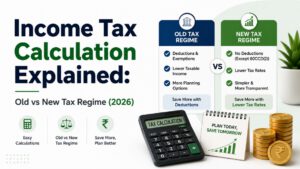
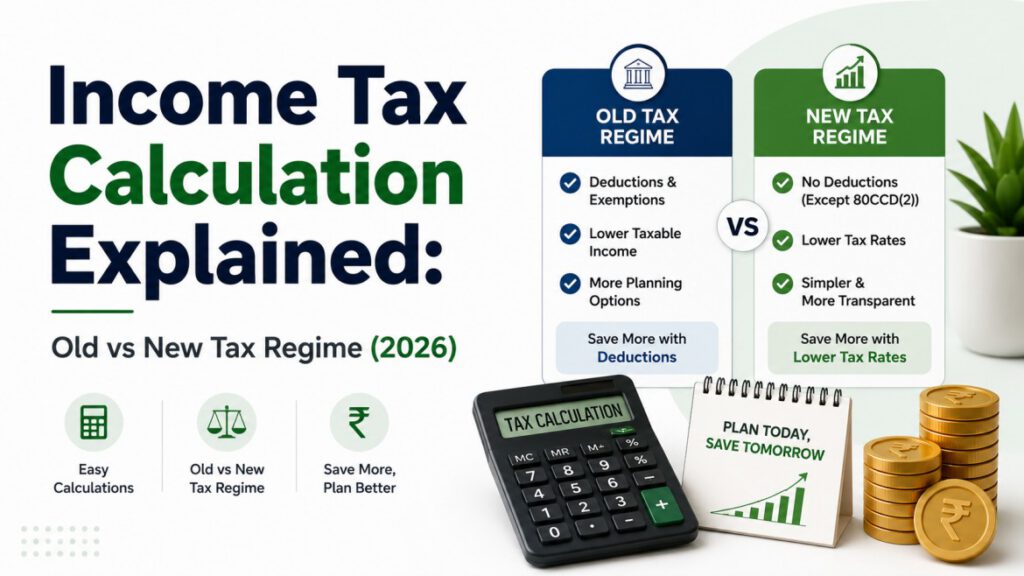
Old Tax Regime
The Old Tax Regime allows taxpayers to claim various deductions and exemptions, including:
- Section 80C investments
- Health insurance under Section 80D
- House Rent Allowance (HRA)
- Home loan interest
- Education loan benefits
This regime is generally suitable for individuals who make significant tax-saving investments.
New Tax Regime
The New Tax Regime offers lower tax rates but limits many deductions and exemptions.
It is often beneficial for taxpayers who do not invest heavily in tax-saving instruments or prefer a simpler tax structure.
Which Regime Should You Choose?
Choose the Old Regime if:
- You claim multiple deductions.
- You invest regularly under Section 80C.
- You pay home loan interest.
Choose the New Regime if:
- You have fewer deductions.
- You want a simple tax filing process.
- Your taxable income benefits from the revised tax slabs.
Tips Before Filing ITR
- Keep PAN and Aadhaar linked.
- Verify Form 26AS and AIS.
- Collect salary slips and bank statements.
- File your return before the due date.
- Choose the appropriate tax regime carefully.
Conclusion
Selecting the right tax regime can help reduce your overall tax liability. Compare both options based on your income, deductions, and financial goals before filing your Income Tax Return.